Elbow pain after pitching (or during it, or after any high effort throwing) should be gone 2-3 days later when you try throwing again, if it's just soreness. If two of these are true, stop throwing and get it evaluated: it's sharp, it sits in one pinpoint spot, or it isn't better after a warm-up or 2-3 days later. For players who are still growing, one is enough.
These are the most common ways athletes with pain on the inside of the elbow describe it to us:
Some also report a pop on one throw with pain right after. If that's you, get evaluated right away.
If you're in the Denver area and this sounds like your pain, come get it evaluated in person.
One thing up front, before you keep reading: Rest is not Arm Care. Time off hides the pain, but it doesn't fix the pain or make your body any stronger.
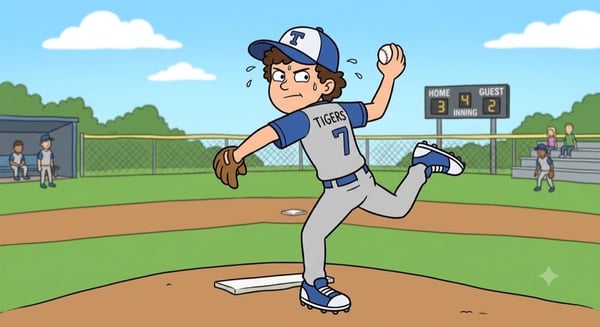
Most players can't tell these apart, and most were never taught how. This is the check we walk families through at an eval. If it fails two of the three steps, it's pain, not soreness, and we recommend an evaluation. For players who are still growing, one fail is enough. That's intentional: a growing elbow has less room for error.
| Soreness (passes) | Pain (fails) | |
|---|---|---|
| Step 1: How it feels | Tight, full, or a dull ache | Sharp, stabbing, or burning |
| Step 2: Where it is | Spread out over the forearm or back of the shoulder | One pinpoint spot you can cover with one fingertip |
| Step 3: Warm-up and 2-3 days | Loosens up after a warm-up and is gone 2-3 days later | Not better after a warm-up, and/or still there 2-3 days after you threw |
Two fails out of three, or one fail for a player who is still growing? Read the next section before you throw again.
After a hard outing, some soreness is part of the deal, because your forearm and the back of your shoulder just did a lot of work. That kind of soreness peaks the next day and fades by day three.
If it's still there 2-3 days after you threw, even after a warm-up, something changed. It might not be serious, but waiting longer won't tell you what it is, and that's the point where we'd want to look at it.
One catch. A warm-up gets blood moving, and that can cover up real pain for the first few throws, so feeling fine early in catch play doesn't clear you. If it comes back with each throw after that, treat it as pain.
Don't wait three days if you have any of these:
These aren't signs of a sore arm. They're signs something is breaking down, and rest alone won't fix it. In a study of 140 teen pitchers, the ones who ended up needing shoulder or elbow surgery had pitched more often with arm pain and fatigue. They also used ice and anti-inflammatories more often to try to prevent injury, which lines up with what we see in the clinic: covering pain up isn't the same as fixing it (Olsen, 2006).
If you hit one of these, call us before you pick up a ball again and we'll tell you what it likely is and what to do next.
If two or more of these are true, you can throw, but cut the volume and the intent. No max effort today.
Sleep is the one people brush off. In a study of 112 teen athletes, the ones who averaged less than 8 hours a night were about 1.7 times more likely to have been injured (Milewski, 2014). If anything from the stop list shows up while you're throwing, stop.
If you have pain, not soreness, the plan changes. Do these in order:
If the player is still growing and the pain is on the inside of the elbow, get evaluated before anything else. Growth plate injuries usually need at least 4 weeks off throwing.
The inside of the elbow is where the UCL lives, the ligament that gets rebuilt in Tommy John surgery. Your forearm muscles sit right on top of it and help protect it, which is why inside elbow pain is the one we tell players not to throw through. Our UCL injury guide goes deeper.
Pain on the back of the elbow is trickier. It often feels like the triceps, but it can be the ligament. The UCL attaches close to the same spot, so it's easy for players and coaches to chase the triceps while the real problem is the UCL.
For players roughly 9 to 16 (in our experience, most often 9 to 13), inside elbow pain may be the growth plate rather than the ligament. Our Little League elbow guide explains what that looks like and why it needs time off throwing.
If someone has already mentioned Tommy John, read our Tommy John surgery guide before you make any decisions.
Elbow and shoulder problems often travel together. In pro pitchers, losing certain shoulder motion lined up with about 2.6 to 2.8 times the elbow injury risk (Wilk, 2014), so we measure both shoulders, not just the elbow. Our shoulder pain guide covers that side of it.
You probably just need a real routine if the soreness is mild and only shows up now and then, a routine settles it down within a week, and you're sleeping, eating and managing your workload.
You need more than a routine if:
Your athlete may not tell you everything. A lot of players play down pain because they're scared of getting shut down, especially in season.
In a survey of 203 healthy youth baseball players, only 26% said their arm never hurt when throwing, so about 74% had pain at least some of the time (Makhni, 2015). If your athlete says it never hurts, that's statistically unlikely. In our experience, that's even more true for players who throw 6 or more months of the year.
Three questions usually get you the truth: Is it sharp? Can you point to it with one finger? Is it still there after a warm-up, or three days after you pitched? If he's still growing, one yes means it's time to get him evaluated. For older players, two yeses.
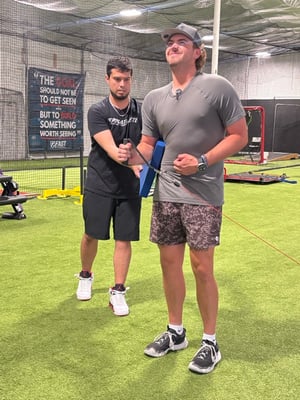
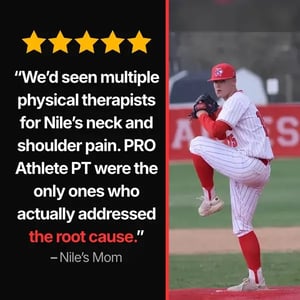
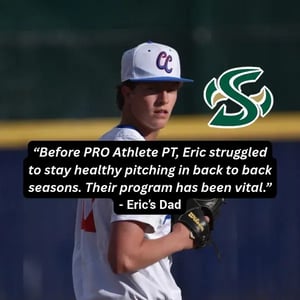
Two of our players show why we don't wait these out. Nile knew his arm hurt, but nobody he'd seen could figure out why. We found the cause in his first visit, worked through the fix with him, and he went on to pitch in college. Eric never had an injury at all. He was just always sore, and his arm would get achy, so we built him a custom routine around what his arm needed, and he's now committed to a Division I school.
We spent seven years between us on the Minnesota Twins medical staff, and that's how our baseball physical therapy works: you get cleared when the numbers say the arm is ready, not just when the pain goes away. In practice, that means we test strength with numbers and measure motion on both arms, train the arm on purpose instead of waiting it out, and send you home with a return to throwing plan and an arm care routine you can actually follow.
"I have been battling with some sharp pain in my elbow for the last 4 month and I have tried everything I could to fix it on my own but nothing was working. ... Edwin explained why this pain was happening in a way I could understand and built me a program to make sure we are not having the same issues in a couple months."
Beau Yaremko, Google review
You want a straight answer, and your kid back on the mound without the pain coming back. The free 15 minute call is where that starts.
Our guarantee
Arm still hurts or stays sore when he throws? Our $150 Arm Pain Eval with former Twins medical staff is a one time fee for the diagnosis and the plan. In 60 minutes you'll know what's causing it, or exactly what the next step is and why (like an X-ray or MRI). If not, you pay $0.
Every outing on an arm that isn't ready is another chance for a sore arm to become a hurt one, and the sooner you know what's going on, the less time you miss.
Not ready to call yet? Download our free arm care routine.
Q: Is it normal to have elbow pain after pitching?
A: Some soreness after a hard outing is normal. It feels tight or full, it's spread out, it loosens up as you throw, and it fades within 2-3 days. If two of these are true, it's not normal and we recommend an evaluation: it's sharp, it sits in one pinpoint spot, or it isn't better after a warm-up or 2-3 days later. For players who are still growing, one is enough.
Q: How long should elbow soreness last after pitching?
A: 2 to 3 days at most. If it's still there 2-3 days after you threw, even after a warm-up, get it looked at.
Q: Should I keep throwing if my elbow is sore?
A: If it's mild soreness that loosens up and stays loose, you can usually throw. Just pull back the volume and the effort. If two of these are true, stop throwing and get it evaluated: it's sharp, it sits in one pinpoint spot, or it isn't better after a warm-up or 2-3 days later. For players who are still growing, one is enough. Numbness or tingling in your hand means stop today.
Q: My elbow feels fine once I warm up. Am I good?
A: Not yet. A warm-up can hide real pain for a few throws. If the pain comes back with each throw, treat it as pain, not soreness, and stop.
Q: What does pain on the inside of the elbow mean?
A: That's where the UCL sits. In players who are still growing, it can also be the growth plate. Either way, inside elbow pain that's sharp or lingers needs an in person evaluation.
Q: What does pain on the back of the elbow mean?
A: It often feels like the triceps, but it can be the ligament. The UCL attaches close to the same spot, so it's easy for players and coaches to chase the triceps while the real problem is the UCL. If it lingers, get it checked.
Q: My son has elbow pain after pitching. When should he see a PT?
A: For players who are still growing, the rule is stricter on purpose: if his pain is sharp, sits in one pinpoint spot, or isn't better after a warm-up or 2-3 days later, any one of those is enough. Get him evaluated.
Q: Should I ice a sore elbow?
A: Ice can take the edge off. It changes what you feel. It doesn't fix what's wrong. It's like shaking your hand after you slam it in a door: it feels better for a second, but nothing got repaired. Read why in our guide on active recovery for pitchers.
Q: Will rest fix my elbow pain?
A: Rest quiets it because you stopped picking the scab. It doesn't make the arm stronger. Rest is not Arm Care. If you shut down with no routine, the same pain usually comes back when you start throwing again.
Q: What does the Arm Pain Eval cost?
A: $150, a one time fee for the diagnosis and the plan, with former Twins medical staff. In 60 minutes you'll know what's causing it, or exactly what the next step is and why. If not, you pay $0.
Q: How fast can we get in?
A: Start with a free 15 minute call. We'll tell you if an evaluation makes sense and get you on the schedule at Lakewood or Centennial. Most families are seen within a week.
Reading about elbow pain isn't the same as having someone watch you throw. If your elbow keeps getting sore after you pitch, or your velo is down and nobody can tell you why, we'll look at it in person.
We run two clinics in the Denver metro, both staffed by former Minnesota Twins medical staff.
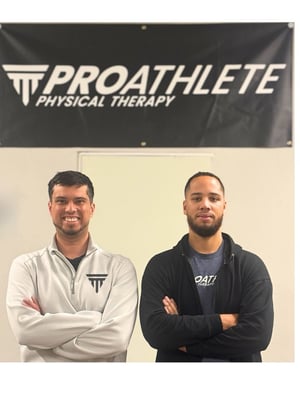
We see pitchers from Lakewood, Centennial, Aurora, Boulder, and Highlands Ranch. Start with a free 15 minute call and we'll tell you straight whether we can help.
Disclaimer: This page is for educational purposes only and is not a substitute for professional medical advice, diagnosis, or treatment. If you or your athlete have elbow pain, see a licensed physical therapist, athletic trainer, or physician in person.
