Home / Baseball Arm Injury Guide / Little League Shoulder in Young Pitchers: A Denver Parent's Guide
Your son's shoulder hurts when he throws right at the upper arm. It does not hurt when he swings, lifts, or runs. It only shows up with high intent throwing, and is getting worse.
If he's a baseball player between the ages of 8 and 16, he might be dealing with what's called Little League shoulder. Little League shoulder is not a strain, a knot, or a phase he will grow out of. It is a stress injury to the growth plate in the upper arm bone, and it happdens because a young arm was asked to throw more than it was built to handle.
Here is the part most parents do not hear at the first appointment. Almost every kid gets better without surgery. A 2021 systematic review pooled 266 young athletes. Of the ones whose return was tracked, 94 percent got back to their sport and 92.5 percent got back to the same level they played before the injury (Bednar et al., 2021).
But nearly 1 in 5 had the pain come back. That is the number worth paying attention to, and it is the reason we treat this the way we do.
Little League shoulder is when the growth plate at the shoulder becomes irritated, widened or in some cases even fractured from throwing a baseball too much without proper recovery. The upper arm bone has a growth plate near the shoulder. A growth plate is a soft strip of spongy, cartilage-like bone where growth happens. It stays open until the late teens, and while it is open it is the weakest link in the arm.
Every throw twists that growth plate. One throw is nothing. Two hundred throws a week, month after month, adds up. The growth plate gets irritated and starts to widen. That is Little League shoulder. The medical name is proximal humeral epiphysiolysis, but you will never need to say it out loud.
Little League shoulder is not a torn labrum or a rotator cuff injury. Those are adult problems. This is a youth athlete problem, and it exists only because the growth plate is still open. That is also why it heals so reliably when it is treated right.
Throwing a baseball puts enormous twisting force through a young shoulder. In pitchers averaging 12 years old, that force peaks just before the arm reaches full external rotation, which is exactly where the growth plate is weakest. Research points to that twisting force, more than the pulling force, as the main driver of this injury (Sabick et al., 2005).
Three things stack the odds:
This injury is almost always a baseball problem and almost always a boys problem. In one 2021 study of 266 athletes, 261 played baseball as their main sport, and only 2 of the 266 were girls (Bednar et al., 2021).
If your son is also getting pain on the inside of his elbow, read our guide to Little League elbow. The two injuries come from the same root cause, and plenty of kids get both.
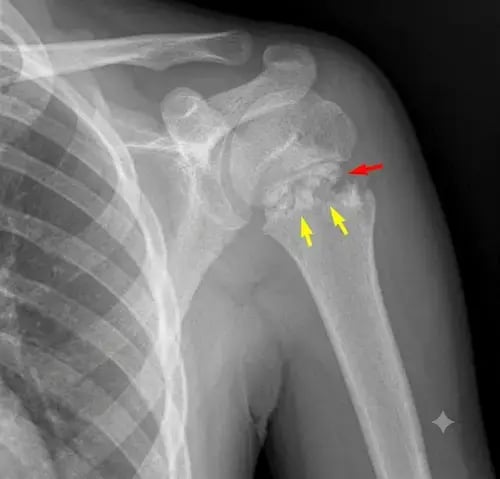
The main signs are swelling or tenderness near the upper arm (the growth plate area), sharp pain while throwing that eases with rest, dropping velocity or accuracy late in an outing, soreness that lasts more than a day or two, and changes to his arm slot or mechanics to work around the pain.
Here's what to look for:
The tricky part is that this injury feels better with rest in the early stages. He takes a week off, the pain goes away, he goes back out, and it comes back worse. Parents read that first part as proof it was nothing. It was not nothing. It was the growth plate getting a short break.
One more sign that gets missed. Kids rarely say "it hurts." They say the arm feels dead, heavy, or tired. Take that talk seriously.
A youth pitcher must stop throwing the moment they feel shoulder pain or unusual arm fatigue. Continuing to pitch with Little League Shoulder symptoms drastically increases the risk of permanent damage to the shoulder joint and growth plate.
The reason is simple. Growth plate injuries get harder to fix the longer they are pushed. In rare cases, a growth plate that keeps getting hammered can close early, which affects how the arm develops. That is uncommon, and it showed up in only 1 athlete out of 266 in the 2021 review, but it is the one outcome you cannot undo.
So stop the throwing. Then start the work.
Rest is not Rehab. Taking the ball out of his hand stops the damage. It does not rebuild anything. A shoulder that sits still for three months comes back weaker, stiffer, and less prepared than the one that got hurt. That is how kids end up in the 18.7 percent who get this again.
Recovery runs from about 2 months to just under 8 months, depending on how early it was caught. Symptom relief comes first. A structured return to throwing program supervised by a baseball specialist comes after, and that is what sets the real return date.
In the 2021 systematic review, the most common shutdown period from throwing was 4 months. That was the plan for 41.9 percent of the athletes. Others were held out for 4 to 6 weeks or for 3 months. Time to full symptom resolution ranged from 2 to 7.7 months (Bednar et al., 2021).
A separate study of 95 young athletes found symptoms resolved in an average of 2.6 months and athletes returned to competition in an average of 4.2 months (Heyworth et al., 2016).
So the honest answer to "how long" is a range, not a date. Most young pitchers are looking at somewhere between 3 and 6 months from first shutdown to first competitive inning. A summer showcase season is usually gone. A spring season is usually savable if you catch it in the fall.
What actually sets the timeline is not the calendar. It is whether he hits the checkpoints:
A kid who does the work can hit those in 3 months. A kid who only rests often is not ready at 6.
The best available evidence says yes. The good news for worried parents is that with strict rest and a baseball specific physical therapy plan, there are rarely any long-term effects of Little League Shoulder. Once the growth plate injury fully heals and the athlete completes a structured return-to-throwing program, the vast majority of youth pitchers regain their previous pitching velocity and accuracy.
That is from Bednar et al., 2021. It is one systematic review, and the athletes in it were followed for varying lengths of time, so treat it as a strong signal rather than a guarantee for your specific kid.
This is the conversation we would rather have with you at the start than at the end. This injury is not the end of anything. It is a hard stop and a rebuild.
When Little League Shoulder symptoms return, it usually comes down to either a rushed recovery or jumping right back into high volume throwing without enough rest. If a child rests their arm for two months but returns to the mound with the same habits and strength/flexibility that caused the pain in the first place comes right back.
One systematic review found symptoms returned in 18.7 percent of athletes (Bednar et al., 2021). A study of 95 young athletes found 7 percent (Heyworth et al., 2016). The honest read is somewhere in that range, and it depends heavily on what happened during the time off (A.K.A. did he see a baseball specialist or a generalist PT).
Sitting on the couch does not fix the underlying strength and flexibility problem. Neither does icing. Neither does waiting. Those things reduce pain, and reduced pain feels like progress. The growth plate has calmed down, but the thing that overloaded it in the first place is still there.
Then he throws, and it comes back.
That is the whole argument for sports rehab in one paragraph. If you want the longer version, read why icing and waiting do not work.
Usually no. Little League Shoulder is almost never caused by just bad mechanics. It's caused by throwing too much before the arm was built to handle it.
Here's what actually happened. The growth plate in a young pitcher's shoulder is the softest, weakest part of the whole arm while he's still growing. It's the last piece to harden. When you stack up enough throws on top of a growth spurt, that plate gives out before the muscles, ligaments, or tendons ever do. That's the real reason he got hurt. Not his arm slot or arm drag.
Note: Nobody is making the argument that bad throwing mechanics should be ignored. It's just that when it comes to 8 to 14 year olds, they will change throwing mechanics many times before and during puberty so overhauling his mechanics now with months of coaching and lessons is not necessary. Chasing a mechanics fix usually solves the wrong problem.
The fix that matches the cause is managing his volume, which means pitch counts, how many months a year he throws, and real rest between outings, while building the strength his body hasn't caught up to yet.
One honest exception. If he started throwing weird to pitch around the pain, that new habit can stick and cause its own trouble. That's worth a look. But that's cleanup after the injury, not the thing that caused it.
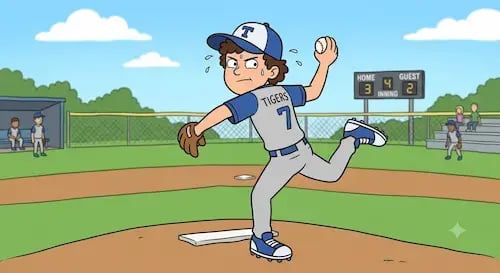
Prevention is not complicated. It is just unpopular, because every item on this list costs playing time somewhere.
None of that requires a clinic. If your family does those six things, you have removed most of the risk.
When treating a youth pitcher for this condition, our primary goal is to heal the shoulder joint while ensuring the injury never comes back. Our Little League Shoulder treatment protocol combines active rest and targeted physical therapy exercises to build strength and flexibility and teaching athletes and families about proper arm care routines and recovery habits.
Rest is not Rehab. The shutdown from throwing is the first step, not the plan. The plan is what happens during those months, and it is the difference between a kid who comes back and a kid who comes back and gets hurt again.
Here's our three step process:
Dr. Edwin Porras spent time on the Minnesota Twins medical staff. Thaddeus Hayes spent five years as an athletic trainer with the Twins. The return to throwing standards we use with a 12 year old in Lakewood come from the same framework used with professional pitchers. The volumes are different. The standards are not.
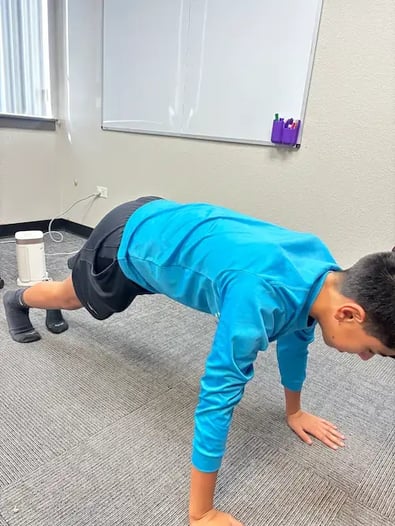
If he is throwing through shoulder pain right now, the fastest thing you can do is stop the throwing and get eyes on it. A 15 minute call costs you nothing and will tell you whether this needs a full evaluation or whether you can manage it at home. We see families from across the Denver metro and the Front Range at our Lakewood and Centennial locations, including Aurora, Boulder, and Highlands Ranch.
