---
title: "Tommy John Surgery: Cost, Timeline and Real Recovery Odds"
description: How long is Tommy John recovery, what does it cost, and will he throw as hard? Answers for baseball parents from former Minnesota Twins medical staff.
image: https://www.proathletept.com/hubfs/UCL%20repair%20with%20internal%20brace%20on%20the%20elbow%2c%20Tommy%20John%20surgery%2c%20Lakewood%20baseball%20rehab.webp
---
[Skip to main content](https://www.proathletept.com/baseball-injury-guide/tommy-john-surgery#main-content)
[ ](https://www.proathletept.com?hsLang=en)
- [Home](https://www.proathletept.com)
- Show submenu for Locations Locations
- [Centennial](https://www.proathletept.com/locations/centennial)
- [Lakewood](https://www.proathletept.com/locations/lakewood)
- Show submenu for Baseball Injury Guides Baseball Injury Guides
- [Baseball Injury Basics](https://www.proathletept.com/baseball-arm-injury-guide-denver)
- [Stop Icing](https://www.proathletept.com/baseball-injury-guide/active-recovery-for-pitchers)
- [Elbow Pain (UCL)](https://www.proathletept.com/baseball-injury-guide/ucl-injury)
- [Tommy John Surgery](https://www.proathletept.com/baseball-injury-guide/tommy-john-surgery)
- [Little League Elbow](https://www.proathletept.com/baseball-injury-guide/little-league-elbow)
- [Shoulder Pain](https://www.proathletept.com/baseball-injury-guide/shoulder-pain-baseball-players)
- [Little League Shoulder](https://www.proathletept.com/baseball-injury-guide/little-league-shoulder)
- [Common Questions](https://www.proathletept.com/faq-sports-physical-therapist-denver-co)
- [About Us](https://www.proathletept.com/the-story-and-team)
- Show submenu for FREE Stuff FREE Stuff
- [Fix Arm Pain](https://www.proathletept.com/arm-pain-form)
- Armcare Routine
- [Get Stronger](https://www.proathletept.com/velo-strength)
Open main navigation
Close main navigation
- [Home](https://www.proathletept.com)
- Show submenu for Locations Locations
- Locations
- [Centennial](https://www.proathletept.com/locations/centennial)
- [Lakewood](https://www.proathletept.com/locations/lakewood)
- Show submenu for Baseball Injury Guides Baseball Injury Guides
- Baseball Injury Guides
- [Baseball Injury Basics](https://www.proathletept.com/baseball-arm-injury-guide-denver)
- [Stop Icing](https://www.proathletept.com/baseball-injury-guide/active-recovery-for-pitchers)
- [Elbow Pain (UCL)](https://www.proathletept.com/baseball-injury-guide/ucl-injury)
- [Tommy John Surgery](https://www.proathletept.com/baseball-injury-guide/tommy-john-surgery)
- [Little League Elbow](https://www.proathletept.com/baseball-injury-guide/little-league-elbow)
- [Shoulder Pain](https://www.proathletept.com/baseball-injury-guide/shoulder-pain-baseball-players)
- [Little League Shoulder](https://www.proathletept.com/baseball-injury-guide/little-league-shoulder)
- [Common Questions](https://www.proathletept.com/faq-sports-physical-therapist-denver-co)
- [About Us](https://www.proathletept.com/the-story-and-team)
- Show submenu for FREE Stuff FREE Stuff
- FREE Stuff
- [Fix Arm Pain](https://www.proathletept.com/arm-pain-form)
- Armcare Routine
- [Get Stronger](https://www.proathletept.com/velo-strength)
- [BOOK CALL](https://start.proathletept.com/book-a-call-page)
-
[BOOK CALL](https://start.proathletept.com/book-a-call-page)
[Home](https://www.proathletept.com/?hsLang=en) / [Baseball Arm Injury Guide](https://www.proathletept.com/baseball-arm-injury-guide-denver?hsLang=en) / Tommy John Surgery
# Tommy John Surgery in Baseball Pitchers: What Denver Parents Should Know
*Written by [Dr. Edwin Porras, DPT,](https://www.proathletept.com/the-story-and-team?hsLang=en)Board Certified Orthopedic Specialist and published author on baseball throwing programs, former Minnesota Twins medical staff. Co-authored by [Thaddeus Hayes, MAT, LAT, ATC, former Minnesota Twins athletic trainer.](https://www.mlb.com/press-release/press-release-twins-announce-2023-minor-league-staff-assignments)*, and [Sarah Clay, PT, DPT,](https://www.clarku.edu/news/2025/01/08/getting-players-back-into-the-swing-of-it/) physical therapist for the Tampa Bay Rays.
Your elbow just told you something is wrong.
Maybe it was a pop. Maybe it was a slow fade in velocity you tried to ignore. Either way, a UCL injury has a way of making your whole future in the game feel uncertain. Here is what is actually true: A UCL injury is not a career sentence. It is a decision point. This guide breaks down what the UCL is, when surgery is (and is not) the answer, honest recovery timelines, and how to come back strong. No sugarcoating.
**Surgery is not a shortcut. Rest is not Rehab.**
Whether you have surgery or not, getting back stronger takes a plan, not just time off.
## What Is Tommy John Surgery?
Tommy John surgery fixes a torn UCL, the ligament on the inside of the elbow that stabilizes a pitcher's arm. [The original version, first performed by Dr. Frank Jobe in 1974](https://pmc.ncbi.nlm.nih.gov/articles/PMC7714322/) on Dodgers pitcher [Tommy John](https://en.wikipedia.org/wiki/Tommy_John), replaces the torn ligament with a tendon taken from somewhere else in the body.
That is the definition. It does not answer what a parent actually came here for. Whether your son needs surgery at all. What recovery costs in months and dollars. Whether he throws as hard after. Two former Minnesota Twins medical staffers built the rest of this page to answer exactly that.
## What Is a UCL Injury and Why Does It Happen?
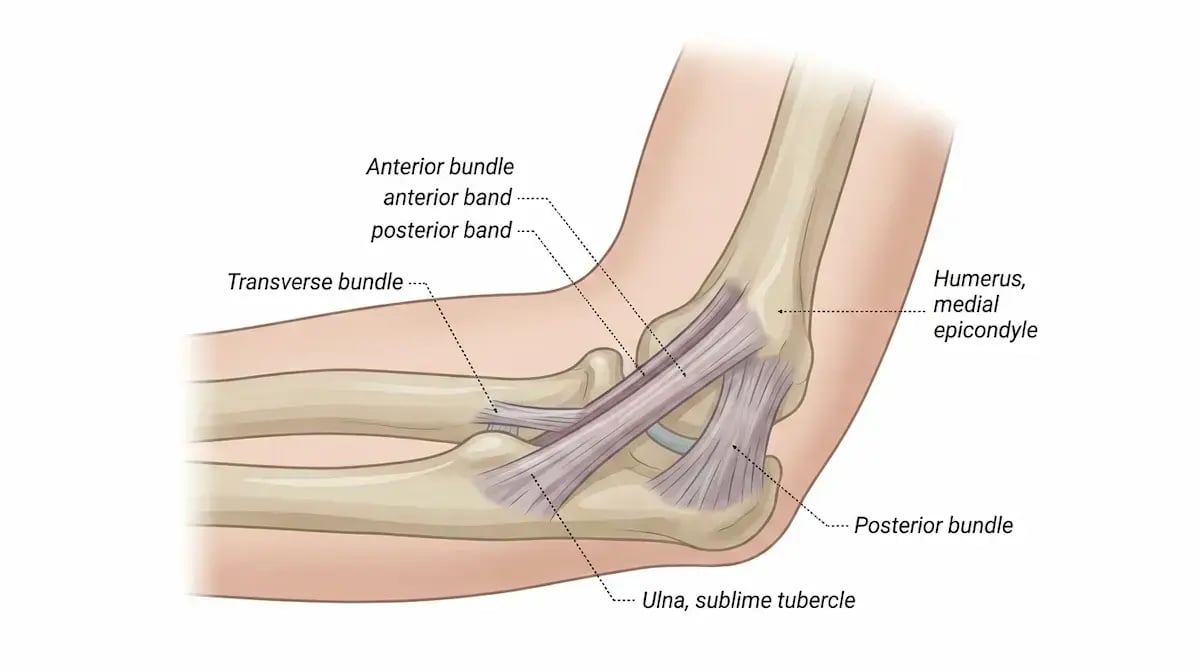
[The UCL, or ulnar collateral ligament](https://www.proathletept.com/baseball-injury-guide/ucl-injury?hsLang=en), is the main ligament holding together your elbow. After repeated throwing that ligament can no longer absorb what's called valgus stress and tears.
Whether you need surgery or go the physical therapy and rest route is not your call to make alone. Your surgeon gives a recommendation based on the grade, which of the three ligament bands is torn, the health of the ligament, and where the tear sits. Distal tears (closer to the forearm) tend to be more severe and more likely to need surgery. Proximal tears (closer to the upper arm) do very well with good baseball specific physical therapy and rest.
UCL injuries are graded 1 through 3:
- Grade 1: a stretch, no tear
- Grade 2: a partial tear
- Grade 3: a complete tear
## Repair or Reconstruction: The Two Types of Tommy John Surgery
Surgery on the elbow UCL is commonly called "Tommy John" surgery, and it is not one procedure. It is two, with very different recovery timelines.
### UCL *Repair*
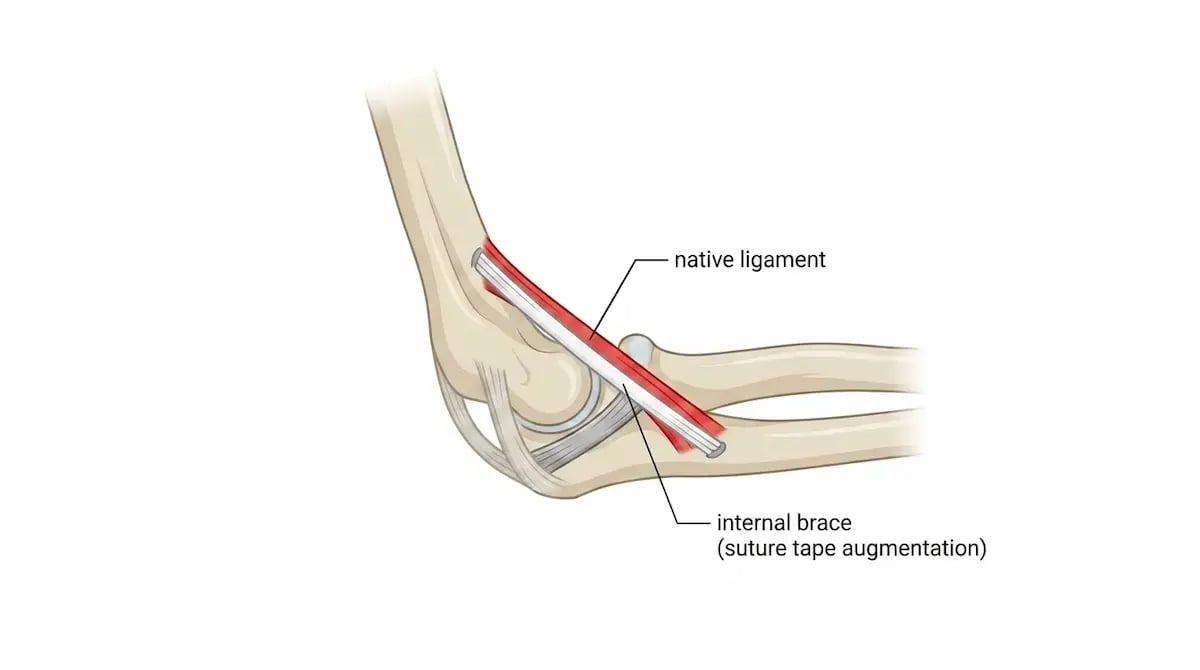
Your own ligament gets reattached to the bone. Depending on the injury and your surgeon, an internal brace may reinforce it. Recovery typically runs 6 to 9 months, shorter than reconstruction, because you are working with your own ligament tissue. Repair is only an option for the right tear in the right athlete.
### UCL Reconstruction
Your surgeon replaces the ligament entirely with a tendon graft, usually from the forearm or the leg. Because it is new tissue learning to work as a ligament, the timeline runs longer.
For most athletes, reconstruction rehab runs 12 to 14 months before return to a live inning scenario. It also depends whether athletes are returning as a starter or a reliever. Depending on your surgeon's protocol and how your body responds, that can stretch to 18 months. There is no shortcut on tissue maturation.
## Tommy John Surgery Success Rate
[Anderson et. al. found that about 85%](https://pubmed.ncbi.nlm.nih.gov/34181472/) of young baseball players (high school and college) return to their old self after surgery. However, these rates declined as pitchers reached the professional ranks.
A second Tommy John surgery is rare, but it happens. Somewhere between 5 and 15 out of 100 pitchers who have the surgery once end up needing it again. It is almost never right away. On average, pitchers who need a second surgery go about 5 years before it happens [(Marshall et al., 2015)](https://journals.sagepub.com/doi/abs/10.1177/0363546515579636).
## Should a Young Pitcher Get Surgery to Prevent an Injury?
No. Some families ask about surgery before there is even an injury, believing it makes the elbow stronger and future-proof. It does not. A reconstructed elbow is not stronger than a healthy, well-trained one. Preventive Tommy John surgery is a myth, and it trades a healthy ligament for a 12-plus month recovery you did not need.
## How Much Does Tommy John Surgery Cost?
This will depend completely on your insurance coverage, deductible and a whole whole of other factors Surgery itself is billed through your surgeon and hospital, and cost varies widely with insurance, facility, and region. The bigger number families miss is the cost of rehab quality. A cheap or generic rehab plan that adds months, or worse, leads to a re-tear, costs far more than doing it right the first time. Weigh the price of proper baseball-specific rehab against what a lost season, or a second surgery, actually costs. That is the math that matters.
## Why Are So Many Young Players Needing Tommy John?
Year-round throwing, no real off-season, chasing velocity before the body is ready, and pitching through pain. Usually, overuse and a body that is under-prepared is the driver, not bad luck. If you are a parent, this is the part you can control long before a surgeon is ever involved. See prevention below, and read our guide on [Little League Elbow](https://www.proathletept.com/baseball-injury-guide/little-league-elbow?hsLang=en).
## Normal Soreness or a UCL Injury? Signs to Watch For
Normal soreness spreads across a big area, shows up after a jump in throwing volume or intensity, and fades within a couple of days.
A UCL injury feels different. Watch for:
- A quick drop in pitching velocity
- Point tenderness right on the inside of the elbow
- Tingling or numbness in the pinky and ring finger
- A pop you hear or feel during a throw
- Pain fully straightening or bending the elbow
- Symptoms that do not resolve with rest
Not every sign shows up every time. Severity varies. If you are seeing any of these, get evaluated. Do not self-diagnose off a search result, including this one.
## Does Velocity Go Up After Tommy John Surgery?
No. This is the most damaging myth in youth baseball. [Surveys show that 23 percent](https://pubmed.ncbi.nlm.nih.gov/22759607/) of youth, 32 percent of high school, and 53 percent of college pitchers believe velocity increases after surgery.
It does not.
Any pitcher who throws harder after Tommy John earned it through the rehab and the return-to-throw program, not the scalpel. The surgery repairs a ligament. It does not upgrade an arm.
## What Are the Risks of Tommy John Surgery?
Possible complications include:
- Infection
- Joint stiffness or reduced range of motion
- Graft failure
- Ulnar nerve irritation, meaning numbness or tingling in the pinky and ring finger
- A drop in performance
A high success rate does not mean zero risk. Every surgery carries *some* risk. Recovery timelines are averages, not guarantees and healing is not always a straight line. Setbacks happen. Stick to your rehab program, progress your workload gradually, and flag concerns to your medical team the moment they come up, not weeks later.
## Can You Recover Without Surgery?
Yes. Low-grade sprains and many partial tears respond well to conservative treatment.[About 8 in 10 pitchers with partial tears return to play without surgery](https://pubmed.ncbi.nlm.nih.gov/36876746/). The ligament itself will not get stronger without surgery, but the muscles and stability around it can, along with fixing the deficits elsewhere in your body, the shoulder, core, hips, and neck, that put extra load on the elbow in the first place.
A conservative plan typically includes:
- A period of rest and activity modification
- Strength, mobility, and stability work around the elbow, shoulder, core, hips, and neck
- Real workload management, not just fewer throws with no plan
- Correcting throwing mechanics
- In some cases, a PRP injection to support ligament healing
Skip surgery and you skip a graft's healing timeline. That is the appeal. It is not the easy way out. It still takes real rehab.
For the full non-surgical recovery timeline, phase by phase, and the data on when conservative care actually works, read our [UCL injury guide](https://www.proathletept.com/baseball-injury-guide/ucl-injury?hsLang=en).
## What Does Tommy John Recovery Look Like Month by Month?
Every surgeon's plan is different, but reconstruction rehab generally moves through phases:
- Months 0 to 2: protect the graft, restore range of motion, rebuild strength and endurance, no throwing
- Months 3 to 6: build total body strength, shoulder and elbow strengthening
- Months 7-10: begin an interval throwing program, build distance and intensity gradually
- Months 10 to 12: progress toward mound work and higher velocity
- Months 12 to 14, up to 18: return to competition when strength, mechanics, and workload clear the bar
The dates matter less than the criteria. You return when your arm has earned it, not when the calendar says so.
## How Do You Prevent a UCL Injury in the First Place?
- Never throw through elbow pain, ever. Additionally, follow MLB Pitch Smart guidelines for your age, take a real off-season (at least 2-3 months a year with no competitive throwing), do not chase velocity. Most importantly, sleep and nutrition are the foundations, not extras. A tired, under-fueled arm breaks down faster
Most UCL injuries are built over years, not blown out in one pitch. The fixes are boring but they work. Prevention is the whole point of a real arm-care program. Learn [how to recover the right way](https://www.proathletept.com/baseball-injury-guide/active-recovery-for-pitchers?hsLang=en).
## How to Manage the Mental Side of Recovery
A few things that help:
- Prioritize sleep and nutrition. These are the foundation everything else is built on
- Stay connected to your team and coaches
- Continue training the rest of your body as hard as you can
- Build a real support system
- Communicate directly with your rehab and medical team, do not wait for the next appointment
Use the time. Classes, friends, family, a new hobby, whatever you would normally not have time for. One hard day does not decide the outcome. Long-term progress is a stack of small wins, not one big moment.
## How We Treat UCL Injuries and Tommy John Recovery at PRO Athlete Physical Therapy
Every evaluation starts with your goals, strength/flexibility, and your mechanics, because that is how these injuries actually happen and how real recovery actually works. Families drive to us from across the state because baseball-specific rehab is not the same as general physical therapy.PRO Athlete Physical Therapy was built by two former Minnesota Twins medical staff members. Edwin Porras, DPT, OCS is a Board Certified Orthopedic Specialist [and published author](https://pubmed.ncbi.nlm.nih.gov/36301515/). Thaddeus Hayes, MAT, LAT, ATC spent five years as a Twins athletic trainer. We do not treat the elbow in isolation.
If you are grinding through UCL rehab anywhere in the Denver metro, whether you are near our Lakewood or Centennial location, or you are not local and want remote programming, a call with us is the right next step. [Compare](https://www.proathletept.com/locations/lakewood?hsLang=en) our two [Denver-area locations](https://www.proathletept.com/locations/centennial?hsLang=en).
Your elbow is not getting stronger by accident. It takes a plan.
[TAP TO BOOK A FREE CALL](https://www.proathletept.com/book-a-call?hsLang=en)
## Frequently Asked Questions
### Can you return to your previous level without surgery?
Yes. Low-grade sprains and many partial tears do well with non-operative treatment, and [about 8 in 10 pitchers](https://pubmed.ncbi.nlm.nih.gov/36876746/)with partial tears return to play without surgery. Recovery time is shorter since there is no graft to heal.
### Does your velocity increase after Tommy John surgery?
No. The surgery repairs a ligament, it does not add velocity. Any gains after surgery come from the rehab and return-to-throw work, not the procedure.
### What is the real difference between UCL repair and reconstruction?
A repair is usually done one a milder tear. A repair reattaches your own ligament, with a shorter recovery, typically 6 to 9 months. Reconstruction replaces the ligament with a tendon graft, typically 12 to 14 months and up to 18, depending on your surgeon's protocol and your body's response.
### How do you tell normal soreness from a UCL injury?
Normal soreness is spread out across a big area, tied to a jump in workload, and fades in a couple of days. A UCL injury tends to bring a velocity drop, point tenderness on the inside of the elbow, numbness or tingling in the pinky and ring finger, or a pop. Get evaluated if you are seeing any of these.
### Should a young pitcher get surgery to prevent a future tear?
No. A reconstructed elbow is not stronger than a healthy one. Preventive Tommy John surgery is a myth and is not recommended.
### What are the biggest risks of Tommy John surgery?
Infection, stiffness, graft failure, ulnar nerve irritation, and a possible drop in performance. Rare, but real.
Not Sure What Is Going On With Your Elbow? [Our Denver team has walked pitchers through this exact recovery process countless times](https://www.proathletept.com/?hsLang=en) .
[TAP TO BOOK A FREE CALL](https://www.proathletept.com/book-a-call?hsLang=en)
### More Resources
- [Baseball Arm Injury Guide](https://www.proathletept.com/baseball-arm-injury-guide-denver?hsLang=en)
- [UCL Injury and Tommy John Guide](https://www.proathletept.com/baseball-injury-guide/ucl-injury?hsLang=en)
- [PRO Athlete Physical Therapy in Lakewood](https://www.proathletept.com/locations/lakewood?hsLang=en)
- [PRO Athlete Physical Therapy in Centennial](https://www.proathletept.com/locations/centennial?hsLang=en)
1. Anderson MJJ, Crockatt WK, Mueller JD, et al. Return-to-Competition Criteria After Ulnar Collateral Ligament Reconstruction: A Systematic Review and Meta-analysis. Am J Sports Med. 2022;50(4):1157-1165.
2. Gopinatth V, Batra AK, Khan ZA, Jackson GR, Jawanda HS, Mameri ES, McCormick JR, Knapik DM, Chahla J, Verma NN. Return to Sport After Nonoperative Management of Elbow Ulnar Collateral Ligament Injuries: A Systematic Review and Meta-analysis. Am J Sports Med. 2023;51(14):3858-3869.
3. Ahmad CS, Grantham WJ, Greiwe RM. Public Perceptions of Tommy John Surgery. Phys Sportsmed. 2012;40(2):64-72.
4. Hintz C, Colón D, Honnette D, Denning N, Porras E, Willard J, Diamond A. Individualizing the Throwing Progression Following Injury in Baseball Pitchers. Curr Rev Musculoskelet Med. 2022.
T*he information provided in this guide is for educational and informational purposes only and does not constitute medical advice. If you or your athlete are experiencing elbow pain, a drop in velocity, or nerve symptoms, do not attempt to self-diagnose. Please consult a licensed physical therapist, athletic trainer, or medical professional for a comprehensive, hands-on evaluation.*
## Lakewood Clinic
## Centennial Clinic
[](https://www.proathletept.com?hsLang=en)
- [Home](https://www.proathletept.com)
- [Locations](https://www.proathletept.com/locations/centennial)
- [About Us](https://www.proathletept.com/the-story-and-team)
- [Common Questions](https://www.proathletept.com/faq-sports-physical-therapist-denver-co)
- [Baseball Recovery/Injury Guide](https://www.proathletept.com/baseball-arm-injury-guide-denver)
**PRO Athlete Physical Therapy, Centennial**
[7240 S Fraser St, Centennial, CO 80112](https://www.proathletept.com/locations/centennial?hsLang=en)
[(720) 248-7527](tel:+17202487527)
**PRO Athlete Physical Therapy, Lakewood**
Inside of FAST Performance
[5825 W 6th Ave #3a, Lakewood, CO 80214](https://www.proathletept.com/locations/lakewood?hsLang=en)
[(720) 248-7515](tel:+17202487515)
2026 PRO Athlete Physical Therapy. All rights reserved.
[Privacy Policy](https://www.proathletept.com/privacy-policy?hsLang=en) | [Terms of Service](https://www.proathletept.com/terms-of-service?hsLang=en)
-
-
-
-
-
```json
{
"@context" : "https://schema.org",
"@id" : "https://www.proathletept.com/#organization",
"@type" : [ "Organization", "MedicalBusiness" ],
"alternateName" : "PRO Athlete PT",
"areaServed" : [ {
"@type" : "City",
"containedInPlace" : {
"@type" : "State",
"name" : "Colorado"
},
"name" : "Lakewood"
}, {
"@type" : "City",
"containedInPlace" : {
"@type" : "State",
"name" : "Colorado"
},
"name" : "Centennial"
}, {
"@type" : "City",
"containedInPlace" : {
"@type" : "State",
"name" : "Colorado"
},
"name" : "Denver"
}, {
"@type" : "City",
"containedInPlace" : {
"@type" : "State",
"name" : "Colorado"
},
"name" : "Aurora"
}, {
"@type" : "City",
"containedInPlace" : {
"@type" : "State",
"name" : "Colorado"
},
"name" : "Highlands Ranch"
}, {
"@type" : "City",
"containedInPlace" : {
"@type" : "State",
"name" : "Colorado"
},
"name" : "Boulder"
} ],
"description" : "Baseball-specific physical therapy and arm care for pitchers and position players in the Denver metro. Founded by former Minnesota Twins medical staff. Cash-pay, one-on-one care focused on UCL injuries, Tommy John recovery, shoulder pain and throwing workload.",
"employee" : [ {
"@id" : "https://www.proathletept.com/the-story-and-team#edwin-porras"
}, {
"@id" : "https://www.proathletept.com/the-story-and-team#thaddeus-hayes"
} ],
"founder" : {
"@id" : "https://www.proathletept.com/the-story-and-team#edwin-porras"
},
"image" : {
"@id" : "https://www.proathletept.com/#logo"
},
"knowsAbout" : [ "Ulnar collateral ligament injury", "Tommy John surgery rehabilitation", "Baseball pitching arm care", "Youth baseball injury prevention", "Interval throwing programs", "Little League elbow", "Pitcher shoulder pain", "Throwing workload management", "Return to throwing after elbow surgery", "Baseball strength and conditioning" ],
"location" : [ {
"@id" : "https://www.proathletept.com/#lakewood"
}, {
"@id" : "https://www.proathletept.com/#centennial"
} ],
"logo" : {
"@id" : "https://www.proathletept.com/#logo",
"@type" : "ImageObject",
"caption" : "PRO Athlete Physical Therapy logo",
"height" : 43,
"url" : "https://www.proathletept.com/hubfs/black%20logo.png",
"width" : 300
},
"name" : "PRO Athlete Physical Therapy",
"sameAs" : [ "https://www.instagram.com/proathletept/", "https://twitter.com/proathletept", "https://www.tiktok.com/@proathletept", "https://www.youtube.com/@PROAthletePhysicalTherapy" ],
"slogan" : "Rest is not Rehab.",
"url" : "https://www.proathletept.com"
}
```
```json
{
"@context" : "https://schema.org",
"@id" : "https://www.proathletept.com/#lakewood",
"@type" : [ "PhysicalTherapy", "SportsActivityLocation" ],
"address" : {
"@type" : "PostalAddress",
"addressCountry" : "US",
"addressLocality" : "Lakewood",
"addressRegion" : "CO",
"postalCode" : "80214",
"streetAddress" : "5825 W 6th Ave #3a"
},
"availableService" : [ {
"@type" : "MedicalTherapy",
"name" : "UCL injury rehabilitation"
}, {
"@type" : "MedicalTherapy",
"name" : "Tommy John post-operative rehabilitation"
}, {
"@type" : "MedicalTherapy",
"name" : "Pitcher shoulder rehabilitation"
}, {
"@type" : "MedicalTherapy",
"name" : "Baseball arm care and injury prevention"
}, {
"@type" : "MedicalTherapy",
"name" : "Return to throwing program"
} ],
"currenciesAccepted" : "USD",
"description" : "Baseball physical therapy and arm care in Lakewood, CO. UCL injuries, Tommy John recovery and pitcher shoulder pain, treated by former Minnesota Twins medical staff.",
"geo" : {
"@type" : "GeoCoordinates",
"latitude" : 39.7268173,
"longitude" : -105.060642
},
"hasMap" : "https://maps.google.com/?cid=11314138971008763672",
"image" : {
"@id" : "https://www.proathletept.com/#logo"
},
"isAcceptingNewPatients" : true,
"name" : "PRO Athlete Physical Therapy, Lakewood",
"parentOrganization" : {
"@id" : "https://www.proathletept.com/#organization"
},
"priceRange" : "$$$",
"sameAs" : "https://maps.google.com/?cid=11314138971008763672",
"telephone" : "+1-720-248-7515",
"url" : "https://www.proathletept.com/locations/lakewood"
}
```
```json
{
"@context" : "https://schema.org",
"@id" : "https://www.proathletept.com/#centennial",
"@type" : [ "PhysicalTherapy", "SportsActivityLocation" ],
"address" : {
"@type" : "PostalAddress",
"addressCountry" : "US",
"addressLocality" : "Centennial",
"addressRegion" : "CO",
"postalCode" : "80112",
"streetAddress" : "7240 S Fraser St"
},
"availableService" : [ {
"@type" : "MedicalTherapy",
"name" : "UCL injury rehabilitation"
}, {
"@type" : "MedicalTherapy",
"name" : "Tommy John post-operative rehabilitation"
}, {
"@type" : "MedicalTherapy",
"name" : "Pitcher shoulder rehabilitation"
}, {
"@type" : "MedicalTherapy",
"name" : "Baseball arm care and injury prevention"
}, {
"@type" : "MedicalTherapy",
"name" : "Return to throwing program"
} ],
"currenciesAccepted" : "USD",
"description" : "Baseball physical therapy and arm care in Centennial, CO. UCL injuries, Tommy John recovery and pitcher shoulder pain, treated by former Minnesota Twins medical staff.",
"geo" : {
"@type" : "GeoCoordinates",
"latitude" : 39.58585083253561,
"longitude" : -104.81636121057306
},
"hasMap" : "https://maps.google.com/?cid=4289837886441355523",
"image" : {
"@id" : "https://www.proathletept.com/#logo"
},
"isAcceptingNewPatients" : true,
"name" : "PRO Athlete Physical Therapy, Centennial",
"parentOrganization" : {
"@id" : "https://www.proathletept.com/#organization"
},
"priceRange" : "$$$",
"sameAs" : "https://maps.google.com/?cid=4289837886441355523",
"telephone" : "+1-720-248-7527",
"url" : "https://www.proathletept.com/locations/centennial"
}
```
```json
{
"@context" : "https://schema.org",
"@id" : "https://www.proathletept.com/the-story-and-team#edwin-porras",
"@type" : "Person",
"alumniOf" : {
"@type" : "SportsOrganization",
"name" : "Minnesota Twins"
},
"description" : "Baseball arm care and UCL specialist. PubMed-published researcher. Former Minnesota Twins medical staff.",
"honorificPrefix" : "Dr.",
"honorificSuffix" : "DPT, OCS",
"jobTitle" : "Doctor of Physical Therapy, Board-Certified Orthopedic Clinical Specialist",
"name" : "Edwin Porras",
"sameAs" : [ "https://pmc.ncbi.nlm.nih.gov/articles/PMC9789277/", "https://www.linkedin.com/in/edwinporras/", "https://www.nytimes.com/athletic/3084893/2022/01/22/twins-tap-twitter-fantasy-football-guru-and-bilingual-physical-therapist-to-work-with-rehabbing-players/", "https://www.mlb.com/press-release/press-release-twins-announce-2022-minor-league-staff-assignments", "https://www.mlb.com/press-release/press-release-twins-announce-2023-minor-league-staff-assignments" ],
"url" : "https://www.proathletept.com/the-story-and-team",
"worksFor" : {
"@id" : "https://www.proathletept.com/#organization"
}
}
```
```json
{
"@context" : "https://schema.org",
"@id" : "https://www.proathletept.com/the-story-and-team#thaddeus-hayes",
"@type" : "Person",
"alumniOf" : {
"@type" : "SportsOrganization",
"name" : "Minnesota Twins"
},
"description" : "Former Minnesota Twins athletic trainer. Five years in professional baseball sports medicine.",
"honorificSuffix" : "MAT, LAT, ATC",
"jobTitle" : "Athletic Trainer, Arm Care Director",
"name" : "Thaddeus Hayes",
"sameAs" : [ "https://www.mlb.com/press-release/press-release-twins-announce-2023-minor-league-staff-assignments" ],
"url" : "https://www.proathletept.com/the-story-and-team",
"worksFor" : {
"@id" : "https://www.proathletept.com/#organization"
}
}
```
```json
{
"@context" : "https://schema.org",
"@id" : "https://www.proathletept.com/#website",
"@type" : "WebSite",
"inLanguage" : "en-US",
"name" : "PRO Athlete Physical Therapy",
"publisher" : {
"@id" : "https://www.proathletept.com/#organization"
},
"url" : "https://www.proathletept.com"
}
```
```json
{
"@context" : "https://schema.org",
"@id" : "https://www.proathletept.com/baseball-injury-guide/tommy-john-surgery#webpage",
"@type" : "MedicalWebPage",
"about" : {
"@type" : "MedicalCondition",
"alternateName" : [ "Tommy John Injury", "UCL Tear", "UCL Sprain" ],
"associatedAnatomy" : {
"@type" : "AnatomicalStructure",
"name" : "Ulnar collateral ligament of the elbow"
},
"code" : {
"@type" : "MedicalCode",
"codeValue" : "S53.449A",
"codingSystem" : "ICD-10"
},
"name" : "Ulnar Collateral Ligament (UCL) Injury",
"possibleTreatment" : [ {
"@type" : "MedicalProcedure",
"name" : "UCL Repair"
}, {
"@type" : "MedicalProcedure",
"name" : "UCL Reconstruction (Tommy John Surgery)"
}, {
"@type" : "MedicalTherapy",
"name" : "Conservative Physical Therapy"
} ],
"riskFactor" : [ {
"@type" : "MedicalRiskFactor",
"name" : "Excessive pitch counts"
}, {
"@type" : "MedicalRiskFactor",
"name" : "Year-round throwing without an off-season"
}, {
"@type" : "MedicalRiskFactor",
"name" : "Chasing velocity faster than the body can handle"
}, {
"@type" : "MedicalRiskFactor",
"name" : "Throwing through elbow pain"
} ],
"signOrSymptom" : [ {
"@type" : "MedicalSignOrSymptom",
"name" : "Pop or electric shock sensation in the elbow during a throw"
}, {
"@type" : "MedicalSignOrSymptom",
"name" : "Sudden drop in pitching velocity"
}, {
"@type" : "MedicalSignOrSymptom",
"name" : "Point tenderness on the inside of the elbow"
}, {
"@type" : "MedicalSignOrSymptom",
"name" : "Numbness or tingling in the pinky and ring finger"
}, {
"@type" : "MedicalSignOrSymptom",
"name" : "Pain with fully bending or straightening the elbow"
} ]
},
"author" : [ {
"@id" : "https://www.proathletept.com/the-story-and-team#edwin-porras"
}, {
"@id" : "https://www.proathletept.com/the-story-and-team#thaddeus-hayes"
} ],
"dateModified" : "2026-08-25T00:00:00-06:00",
"datePublished" : "2026-07-28T00:00:00-06:00",
"description" : "Torn your UCL? Get the real difference between UCL repair and reconstruction, honest recovery timelines, and MLB-level rehab for pitchers in Denver, CO.",
"inLanguage" : "en-US",
"lastReviewed" : "2026-08-25",
"name" : "Tommy John Surgery in Baseball Pitchers: What Denver Parents Should Know",
"primaryImageOfPage" : {
"@type" : "ImageObject",
"caption" : "Baseball pitcher in return-to-throw rehab after Tommy John surgery, Denver sports PT",
"url" : "https://www.proathletept.com/hubfs/youth%20pitcher%20mid-throw%20showing%20elbow%20position%2c%20or%20a%20parent%20watching%20from%20the%20stands.webp"
},
"publisher" : {
"@id" : "https://www.proathletept.com/#organization"
},
"reviewedBy" : {
"@id" : "https://www.proathletept.com/the-story-and-team#edwin-porras"
},
"url" : "https://www.proathletept.com/baseball-injury-guide/tommy-john-surgery"
}
```
```json
{
"@context" : "https://schema.org",
"@id" : "https://www.proathletept.com/baseball-injury-guide/tommy-john-surgery#article",
"@type" : "Article",
"author" : [ {
"@id" : "https://www.proathletept.com/the-story-and-team#edwin-porras"
}, {
"@id" : "https://www.proathletept.com/the-story-and-team#thaddeus-hayes"
} ],
"dateModified" : "2026-08-25T00:00:00-06:00",
"datePublished" : "2026-07-28T00:00:00-06:00",
"description" : "Torn your UCL? Get the real difference between UCL repair and reconstruction, honest recovery timelines, and MLB-level rehab for pitchers in Denver, CO.",
"headline" : "Tommy John Surgery in Baseball Pitchers: What Denver Parents Should Know",
"image" : "https://www.proathletept.com/hubfs/youth%20pitcher%20mid-throw%20showing%20elbow%20position%2c%20or%20a%20parent%20watching%20from%20the%20stands.webp",
"mainEntityOfPage" : {
"@id" : "https://www.proathletept.com/baseball-injury-guide/tommy-john-surgery#webpage"
},
"publisher" : {
"@id" : "https://www.proathletept.com/#organization"
}
}
```
```json
{
"@context" : "https://schema.org",
"@id" : "https://www.proathletept.com/baseball-injury-guide/tommy-john-surgery#breadcrumb",
"@type" : "BreadcrumbList",
"itemListElement" : [ {
"@type" : "ListItem",
"item" : "https://www.proathletept.com",
"name" : "Home",
"position" : 1
}, {
"@type" : "ListItem",
"item" : "https://www.proathletept.com/baseball-arm-injury-guide-denver",
"name" : "Baseball Injury Guide",
"position" : 2
}, {
"@type" : "ListItem",
"item" : "https://www.proathletept.com/baseball-injury-guide/tommy-john-surgery",
"name" : "Tommy John Surgery",
"position" : 3
} ]
}
```
```json
{
"@context" : "https://schema.org",
"@id" : "https://www.proathletept.com/baseball-injury-guide/tommy-john-surgery#faq",
"@type" : "FAQPage",
"mainEntity" : [ {
"@type" : "Question",
"acceptedAnswer" : {
"@type" : "Answer",
"text" : "Yes. Low-grade sprains and many partial tears do well with non-operative treatment, and about 8 in 10 pitchers with partial tears return to play without surgery. Recovery time is shorter since there is no graft to heal."
},
"name" : "Can you return to your previous level without surgery?"
}, {
"@type" : "Question",
"acceptedAnswer" : {
"@type" : "Answer",
"text" : "No. The surgery repairs a ligament, it does not add velocity. Any gains after surgery come from the rehab and return-to-throw work, not the procedure."
},
"name" : "Does your velocity increase after Tommy John surgery?"
}, {
"@type" : "Question",
"acceptedAnswer" : {
"@type" : "Answer",
"text" : "Repair reattaches your own ligament, with a shorter recovery, typically 6 to 9 months. Reconstruction replaces the ligament with a tendon graft, typically 12 to 14 months and up to 18, depending on your surgeon's protocol and your body's response."
},
"name" : "What is the real difference between UCL repair and reconstruction?"
}, {
"@type" : "Question",
"acceptedAnswer" : {
"@type" : "Answer",
"text" : "Normal soreness is spread out, tied to a jump in workload, and fades in a couple of days. A UCL injury tends to bring a velocity drop, point tenderness on the inside of the elbow, numbness or tingling in the pinky and ring finger, or a pop. Get evaluated if you are seeing any of these."
},
"name" : "How do you tell normal soreness from a UCL injury?"
}, {
"@type" : "Question",
"acceptedAnswer" : {
"@type" : "Answer",
"text" : "No. A reconstructed elbow is not stronger than a healthy one. Preventive Tommy John surgery is a myth and is not recommended."
},
"name" : "Should a young pitcher get surgery to prevent a future tear?"
}, {
"@type" : "Question",
"acceptedAnswer" : {
"@type" : "Answer",
"text" : "Infection, stiffness, graft failure, ulnar nerve irritation, and a possible drop in performance. Rare, but real."
},
"name" : "What are the biggest risks of Tommy John surgery?"
} ]
}
```