Home > Baseball Arm Injury Guide > Active Recovery for Pitchers
Written by Dr. Edwin Porras, DPT, Board Certified Orthopedic Specialist and published author on baseball throwing programs, former Minnesota Twins medical staff. Co-authored by Thaddeus Hayes, MAT, LAT, ATC, former Minnesota Twins athletic trainer.
You (or your son) just threw 80 pitches. Arm is sore. Coach hands him an ice bag and says "here, do your recovery"
Here's the problem. Icing changes how the brain feels on the surface of the skin for a few minutes. It does not fix the elbow and shoulder that just absorbed 80 high-speed throws. And resting without a plan does not prepare your body for the next outing.
Rest is not rehab. Ice is not recovery. Active recovery for pitchers is how professional baseball medical staffs have managed arms for decades. It's also how we manage them at PRO Athlete Physical Therapy in Colorado at our Centennial and Lakewood location.
Icing slows down healing. All ice does is numb your skin so it hurts less for a little while. But while it's doing that, it's also cutting off the blood flow your arm needs to fix the tiny damage that happens every time you pitch.
Movement heals your arm faster. Pro pitchers don't sit around with ice bags. That's just what you see on TV. They use movement, soft tissue work, and tools like Blood Flow Restriction (BFR) to push out the junk and get fresh blood and nutrients into tired muscles.
The 48 Hour Rule. If your arm is sore after pitching, that's normal. But it should go away within two days if you're recovering the right way. If you feel sharp pain, your elbow hurts in one specific spot, or your velocity suddenly drops, that's not normal soreness. You need to get evaluated by a PT who specializes in baseball.
Every pitch creates wear and tear (A.K.A. microtrauma) in the muscles, tendons, and ligaments of the shoulder and elbow. Wear and tear is normal. It is not the same as a pitching injury. The difference between wear and tear and injury comes down to one thing: your recovery routine.
When tissue is stressed and then recovered properly, it adjusts and gets stronger. It adapts. When tissue is loaded and then left alone with ice and rest, it does not adapt. It just waits for the next outing. That is where problems start. Active recovery keeps the arm loose and gets blood moving after throwing. Blood carries the good stuff that fixes the small wear and tear throwing causes. Ice slows that blood flow down. That is the opposite of what you want.
A 2019 article by Dubois backs this up. Most sports medicine experts have stopped recommending the old RICE method (Rest, Ice, Compression, Elevation). Resting and icing without moving actually slows down healing. Moving speeds it up. Some baseball clinics even use things like Blood Flow Restriction for recovery. This 2019 review explains more about what BFR is.
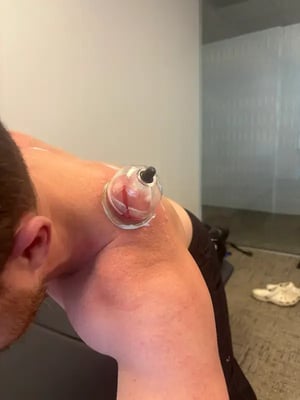
Active recovery for pitchers is simple. Ditch the ice bag. Replace it with movement that keeps blood flowing and tissues loose. At PRO Athlete Physical Therapy, active recovery sessions for baseball players across the Denver metro usually include:
Scapular control and stabilization work (A,K.A. shoulder blade strengthening): The shoulder blade is the base of the throwing arm. When it moves the right way, the shoulder and elbow take less stress. Scapular control drills after throwing help pump out old blood and waste and bring new blood in (to read more about shoulder pain in baseball players check out our full guide).
Tissue mobility and blood flow techniques (A.K.A cupping/dry needling/Blood Flow Restriction). Light band work, hands-on treatment, and targeted stretching bring back the flexibility that gets lost after hard throwing. This is the same post-game routine used by pro baseball medical staffs.
Neuromuscular re-education. After a tough outing, the shoulder muscles need to be "reminded" of the opposite patterns they just underwent. Neuromuscular re-education drills retrain the arm to move in the right order so the next bullpen starts clean.
Blood flow restriction (BFR) training. BFR training lets pitchers build strength in the forearm, shoulder, and posterior chain using lighter weights. This is especially useful during the season when lifting heavy adds too much fatigue. BFR is one of the most popular recovery tools among advanced baseball players right now, and the research behind it keeps growing.
If you want a full MLB-style armcare routine, download ours for free
Parents across the Front Range ask us this all the time: "Is this just soreness or is something wrong?"
Here is a simple way to think about it:
Normal post-throwing soreness (microtrauma) feels like general muscle tiredness in the shoulder or forearm. It can be widespread across the entire shoulder/forearm/elbow and feel "tight" or "full". It goes away within 24 to 48 hours with proper active recovery.
A pitching injury is different. Pain that is sharp, focused on a small spot or does not go away after 48 hours of rest and active recovery needs a professional look. So does any loss of velocity, a heavy arm feeling that sticks around, or a pop during a throw. Read our comprehensive guide to UCL injuries and non-surgical rehab if you have more questions.
If you are not sure, get it checked. We see baseball players from Lakewood, Centennial, Aurora, Boulder, and Highlands Ranch who waited too long because they thought it was "just soreness." Catching it early is cheaper, faster, and keeps your athlete on the field.
A general physical therapist or athletic trainer may not structure post-throwing recovery around the specific demands of the throwing arm. Active recovery for pitchers requires knowledge of the late cocking phase of throwing, scapular mechanics during deceleration, and how the kinetic chain distributes force from the legs through the trunk and into the arm.
That is all we do at PRO Athlete PT. Both clinicians come from the Minnesota Twins organization (Edwin Porras, DPT, OCS board certified orthopedic specialist and published researcher on baseball throwing programs and Thaddeus Hayes, MAT, LAT, ATC, who spent 5+ years as an athletic trainer in the Twins system). We offer Denver athletes the same level of care MLB teams put millions of dollars into every year.
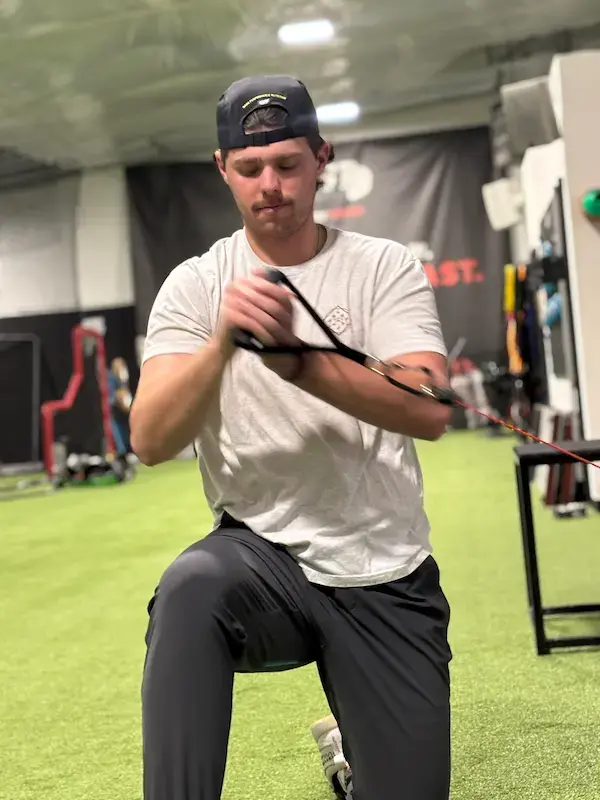
If your baseball player is icing after every outing and the soreness keeps coming back, that is a sign the recovery plan is not working. Book a call with our team. We will walk you through what an active recovery and arm care program looks like, built specifically for your athlete's age, position, and workload.
Q: Is icing bad for baseball players?
A: Icing is not harmful on its own, but it does not fix the underlying stress from throwing. It temporarily changes the feeling of the top layer of the skin. Active recovery that promotes blood flow and tissue mobility is more effective for long-term arm health.
Q: What is blood flow restriction training for baseball players?
A: BFR training uses a specialized cuff to partially restrict blood flow during low-load exercises. This allows pitchers to build muscle and strength without the joint stress of heavy lifting. It is especially useful in-season. Based on available evidence, BFR shows promise for safe strength gains in throwing athletes.
Q: How soon after pitching should active recovery start?
A: Light active recovery can start within a few hours of throwing. Band work, light stretching, and tissue mobility techniques are appropriate the same day. High-intensity training like lifting and running is best done on the same day as a high effort throwing day.
Q: Does PRO Athlete Physical Therapy treat pitchers in-season?
A: Yes. We work with baseball players in-season across the Denver metro, including athletes from Lakewood, Centennial, Aurora, Boulder, and Highlands Ranch. In-season care focuses on keeping the arm healthy while managing workloads around your game schedule.
Reading about active recovery is not the same as having someone watch you throw. Rest is not Rehab. If your arm is sore after every start, or your velo is down and nobody can tell you why, we will look at it in person.
We run two clinics in the Denver metro, both staffed by former Minnesota Twins medical staff.
We see pitchers from Lakewood, Centennial, Aurora, Boulder, and Highlands Ranch. Start with a free 15 minute call and we will tell you straight whether we can help.
The information provided in this guide is for educational and informational purposes only and does not constitute medical advice. If you or your athlete are experiencing elbow pain, a drop in velocity, or nerve symptoms, do not attempt to self-diagnose. Please consult a licensed physical therapist, athletic trainer, or medical professional for a comprehensive, hands-on evaluation.
Want to see more from PRO Athlete in your Google searches? Add us as a preferred source.
